

Introduction
Classroom management strategies play a major role in creating a productive and positive learning environment. A well-managed classroom helps students stay focused, motivated, respectful, and engaged in learning activities. Teachers who use effective classroom management techniques can reduce disruptions, improve student participation, and create a space where every learner feels safe and valued.
In today’s educational world, managing a classroom is not only about maintaining discipline. It is about building relationships, encouraging responsibility, supporting emotional growth, and creating a culture of respect. Whether you are a new teacher or an experienced educator, understanding powerful classroom management strategies can significantly improve teaching success and student outcomes.
This article explores practical and proven classroom management strategies that help teachers maintain order, improve communication, and create a positive classroom atmosphere.
Why Classroom Management Strategies Matter
Effective classroom management is the foundation of successful teaching. Without structure and organization, even the best lesson plans may fail. Students learn better in an environment where expectations are clear and routines are consistent.
Good classroom management strategies help teachers:
- Reduce classroom disruptions
- Improve student behavior
- Increase academic performance
- Build positive teacher-student relationships
- Encourage teamwork and cooperation
- Create a stress-free learning environment
When students know what is expected from them, they feel more confident and secure in the classroom.
Establish Clear Classroom Rules
Create Simple and Understandable Rules
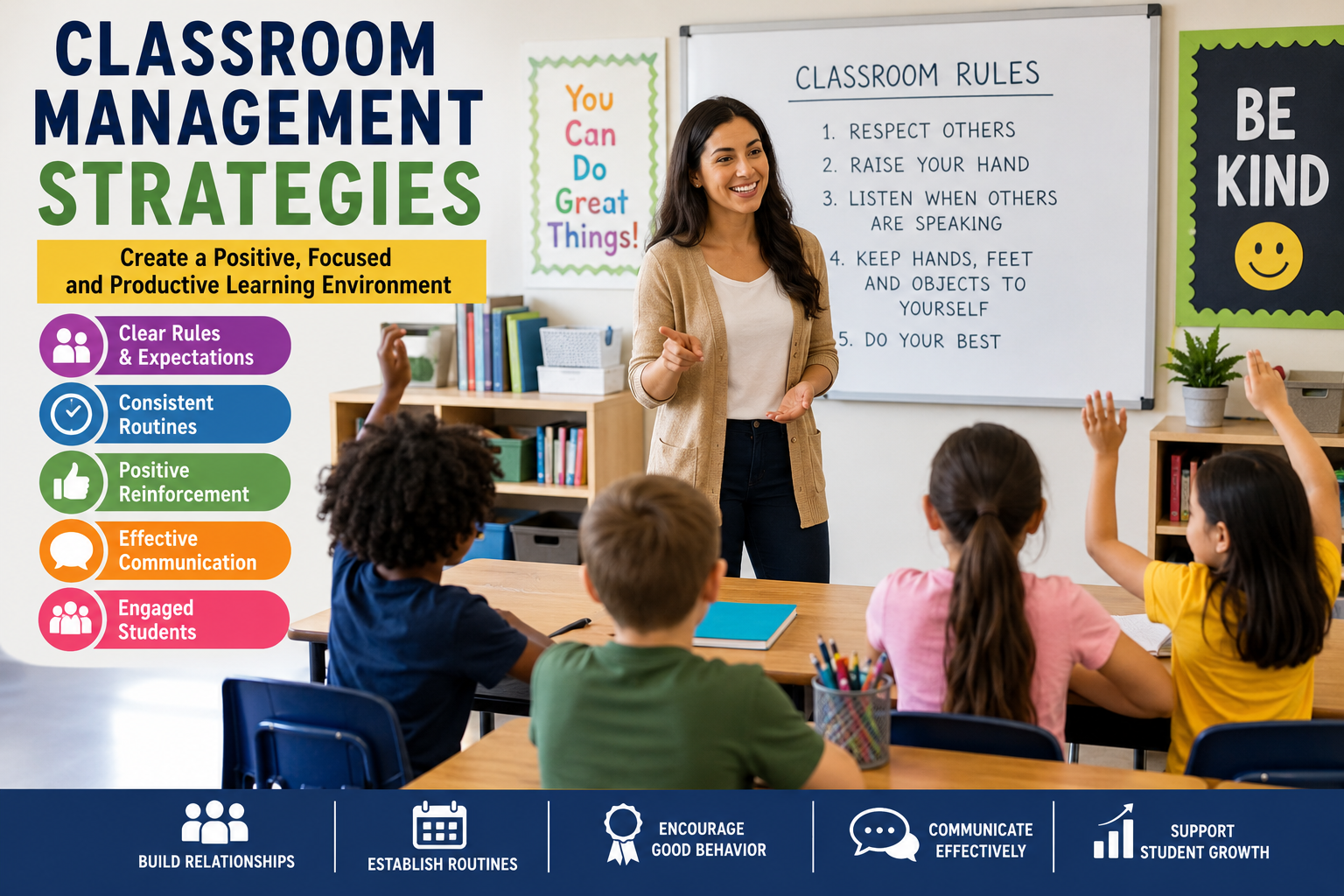
One of the most important classroom management strategies is setting clear rules from the beginning. Students should understand what behaviors are acceptable and what actions are not allowed.
Keep classroom rules:
- Short and simple
- Positive in tone
- Easy to remember
- Consistent for all students
For example:
- Respect others
- Raise your hand before speaking
- Complete assignments on time
- Keep the classroom clean
Avoid creating too many rules because students may become confused or overwhelmed.
Involve Students in Rule Creation
Allowing students to participate in making classroom rules gives them a sense of ownership and responsibility. When students help create the rules, they are more likely to follow them.
Build Positive Relationships with Students
Show Respect and Understanding
Students respond better to teachers who treat them with kindness and respect. A positive relationship between teacher and student builds trust and encourages cooperation.
Simple ways to strengthen relationships include:
- Greeting students daily
- Listening carefully to their concerns
- Encouraging participation
- Recognizing their achievements
Understand Different Learning Needs
Every student is unique. Some students learn quickly, while others need additional support. Effective teachers understand these differences and adjust their teaching methods accordingly.
When students feel understood, they become more engaged and motivated in class.
Maintain Consistent Classroom Routines
Create Daily Procedures
Classroom routines help students know what to expect every day. Predictable routines reduce confusion and save valuable teaching time.
Important routines may include:
- Entering the classroom
- Submitting homework
- Group activities
- Asking questions
- Ending the class
Consistency helps students develop discipline and independence.
Practice Routines Regularly
Teachers should demonstrate and practice routines until students fully understand them. Repetition helps routines become natural habits.
Use Positive Reinforcement
Encourage Good Behavior
Positive reinforcement is one of the most effective classroom management strategies. Instead of focusing only on bad behavior, teachers should reward positive actions.
Examples of positive reinforcement include:
- Verbal praise
- Reward systems
- Extra classroom privileges
- Certificates or recognition
Students are more likely to repeat behaviors that receive positive attention.
Celebrate Small Successes
Even small improvements deserve recognition. Celebrating progress boosts student confidence and motivation.
Develop Strong Communication Skills
Speak Clearly and Calmly
Teachers should communicate instructions in a clear and respectful manner. A calm tone helps maintain control and prevents conflicts from escalating.
Avoid yelling or using harsh language because it can create fear and resistance among students.
Encourage Open Communication
Students should feel comfortable expressing their thoughts and asking questions. Open communication creates a supportive classroom culture where students feel valued.
Manage Classroom Behavior Effectively
Address Problems Early
Small behavioral issues can become larger problems if ignored. Teachers should address inappropriate behavior quickly and fairly.
For example:
- Give gentle reminders
- Use nonverbal signals
- Redirect attention
- Speak privately with the student
Correcting behavior calmly helps maintain classroom respect.
Avoid Public Embarrassment
Publicly criticizing students can damage confidence and create resentment. Private conversations are often more effective when discussing behavior issues.
Keep Students Engaged in Learning
Use Interactive Teaching Methods
Bored students are more likely to become disruptive. Engaging lessons help students stay focused and interested.
Interactive methods include:
- Group discussions
- Educational games
- Hands-on activities
- Technology-based learning
- Collaborative projects
Active participation improves both learning and classroom behavior.
Vary Teaching Techniques
Using the same teaching style every day may reduce student interest. Mixing different teaching approaches keeps the classroom dynamic and exciting.
Create a Positive Classroom Environment
Organize the Classroom Properly
A clean and organized classroom promotes better concentration and learning. Arrange desks in a way that supports communication and movement.
Classroom decorations should also inspire creativity and positivity without causing distractions.
Promote Inclusivity and Respect
Students come from different backgrounds and experiences. Teachers should encourage acceptance, kindness, and teamwork among students.
Inclusive classrooms help students feel emotionally safe and respected.
Encourage Student Responsibility
Give Students Leadership Roles
Assigning classroom responsibilities teaches accountability and teamwork. Students may help with tasks such as:
- Distributing materials
- Cleaning the board
- Managing classroom supplies
- Leading group activities
Leadership opportunities increase student confidence and engagement.
Teach Problem-Solving Skills
Instead of solving every issue for students, guide them to think critically and find solutions independently. This approach builds maturity and responsibility.
Handle Difficult Situations Professionally
Stay Calm During Conflicts
Classroom conflicts are unavoidable, but teachers should remain calm and professional during challenging situations.
Reacting emotionally may worsen the problem. A calm response helps students feel secure and respected.
Focus on Solutions Instead of Punishment
Punishment alone rarely changes behavior permanently. Effective teachers focus on helping students understand their actions and learn from mistakes.
Restorative approaches encourage accountability and personal growth.
Use Technology Wisely in Classroom Management
Educational Tools and Apps
Technology can support classroom management when used correctly. Teachers may use apps for:
- Attendance tracking
- Behavior monitoring
- Assignment management
- Interactive learning activities
Technology can improve organization and communication in the classroom.
Set Digital Boundaries
Students should understand clear rules regarding technology use. Devices should support learning rather than become distractions.
Adapt Strategies for Different Age Groups
Younger Students
Younger children often need:
- Visual reminders
- Frequent encouragement
- Structured routines
- Simple instructions
Patience and creativity are especially important with younger learners.
Older Students
Older students respond better to:
- Independence
- Respectful discussions
- Collaborative learning
- Real-world connections
Teachers should adjust classroom management strategies based on student age and maturity levels.
Common Classroom Management Mistakes to Avoid
Being Inconsistent
Changing rules frequently confuses students and weakens classroom discipline. Consistency builds trust and structure.
Focusing Only on Negative Behavior
Constant criticism can lower student confidence. Balance correction with encouragement and praise.
Ignoring Student Emotions
Students may struggle with personal or emotional challenges that affect behavior. Teachers should show empathy and understanding whenever possible.
Conclusion
Classroom management strategies are essential for creating a productive, respectful, and engaging learning environment. Effective teachers understand that classroom management is not about control alone. It is about building relationships, encouraging responsibility, supporting student growth, and creating a positive atmosphere where learning can thrive.
By establishing clear rules, maintaining consistent routines, using positive reinforcement, and encouraging communication, teachers can successfully manage their classrooms and improve student outcomes. Every classroom is different, so educators should remain flexible and willing to adapt strategies based on student needs.
Strong classroom management not only improves academic success but also helps students develop valuable life skills such as respect, discipline, teamwork, and responsibility. In the long run, these skills contribute to both personal and educational growth, making classroom management one of the most important parts of effective teaching.






Leave a Reply